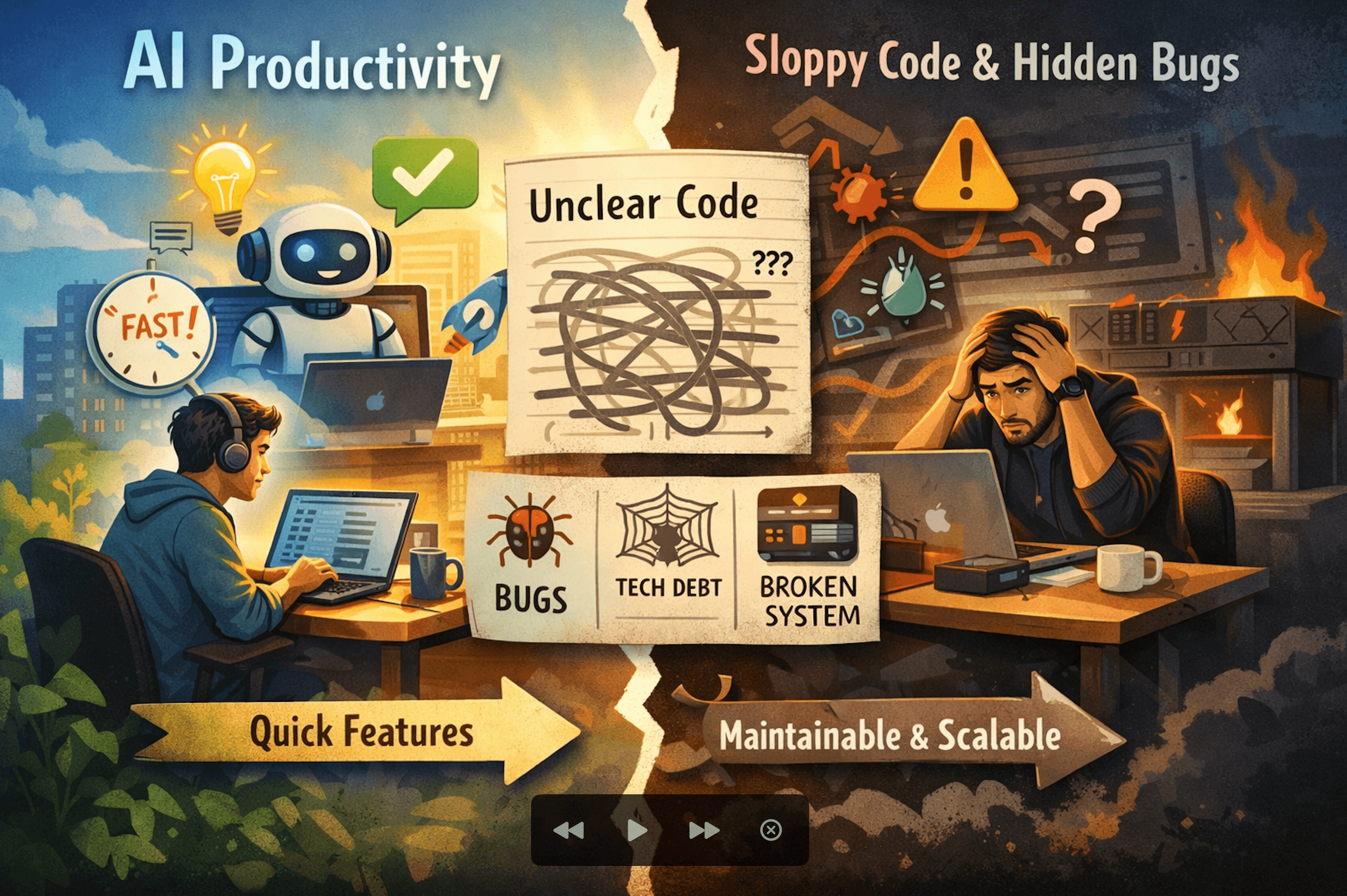
AI Boosts Delivery Speed — But It Can Quietly Destroy Your Codebase
AI has made software development much faster. It helps generate code quickly, reduces boilerplate, and allows developers to build features in a fraction of the time it used to take. This is especially useful for prototypes, small features, and getting unstuck when facing errors. However, this speed comes with a risk. AI can produce code that works but is poorly structured, overly complex, or inconsistent with the rest of the codebase. If developers rely on it blindly, they may end up shipping code they do not fully understand, which creates hidden bugs and long-term maintenance problems.
One of the biggest dangers is that AI can suggest changes to complex parts of a system, and even if the feature appears to work, the developer may not fully grasp what the code is doing. This introduces uncertainty and risk, especially in production systems where reliability matters. Over time, this leads to a codebase that becomes harder to modify and scale as business requirements evolve. What starts as a quick win can turn into technical debt that slows the team down later.
To use AI responsibly, developers still need to apply discipline. AI output should be treated as a first draft, not a final solution. It is important to take time to understand the code, simplify it where possible, and refactor it to match good design practices. Consistency, readability, and clear architecture still matter. AI can improve productivity significantly, but it cannot replace sound engineering judgment. In larger or more critical systems, developer intervention is essential to ensure the code remains clean, reliable, and maintainable over time.